

At a glance
- Doubles and triples describe patterns; exact order and rearranged order require additional conditions.
- 12 and 21 are different sequences, but reversing 11 creates no new sequence.
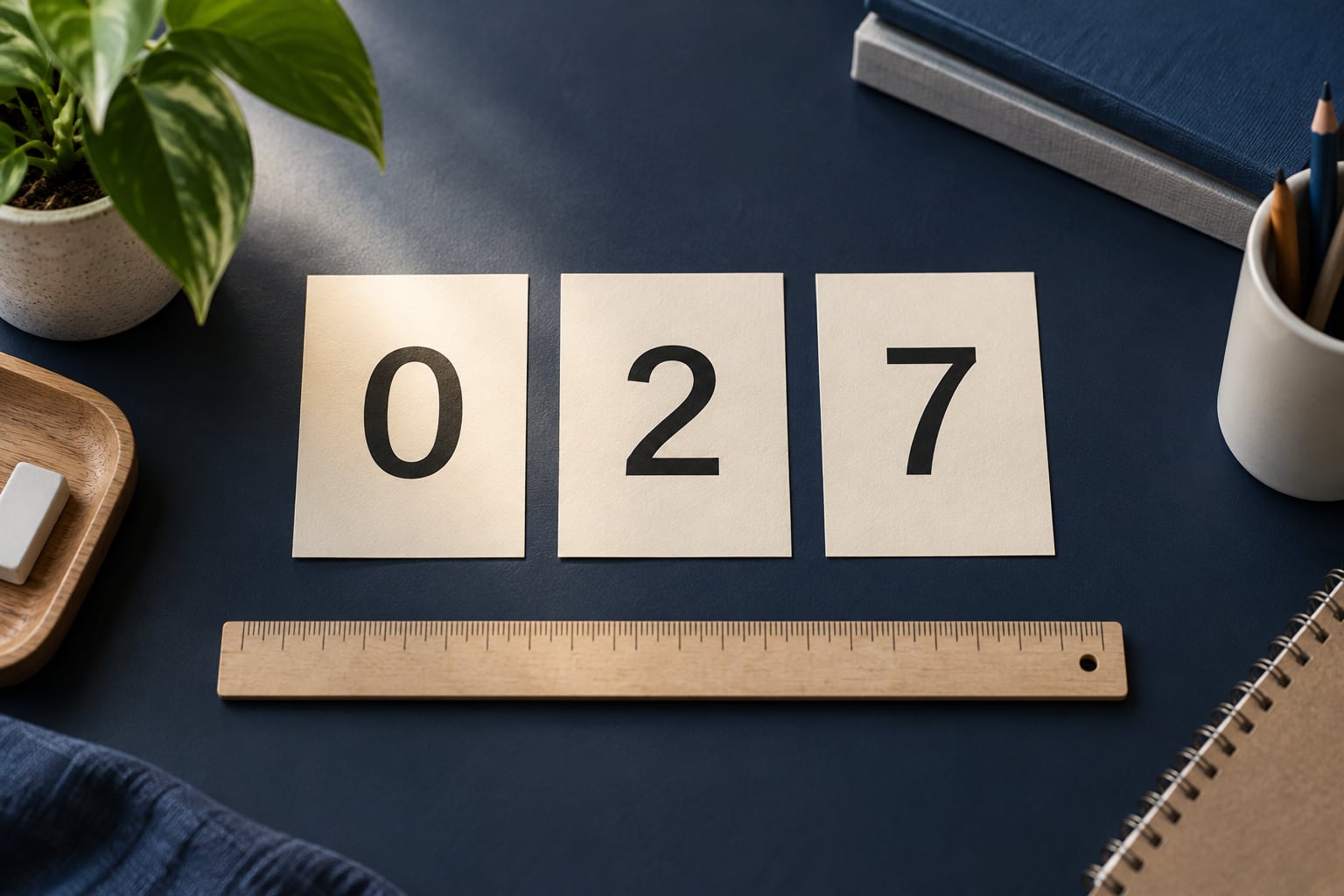
- Preserve leading zeroes and digit counts, including 07, 70, 027 and 270.
- Do not replace official prize names with informal terms or infer payouts from a number's name.
Boen, tong, klap, trong and tot can sound like different names for the same thing. Some describe a number’s pattern; others refer to how a result is matched. Knowing which is which makes Thai lottery conversations and tables much easier to follow.
We start with small examples of repeated digits and changing order, then compare official N3 prize names with counting principles from MIT. Sample space means the set of possible outcomes. Every number here is a teaching example, not a suggestion for an upcoming draw.
A familiar number label does not tell you the full rules or prize conditions.
Doubles and triples
Boen commonly describes two identical digits, such as 11 or 88. Tong describes three identical digits, such as 111 or 888. These examples describe a pattern, without establishing that it is more likely than another particular sequence.
The shorthand helps conversation, but results still need digit counts and prize categories. 88 and a three-digit result ending in 88 are different records.
Reversing digits changes their order
Reversing 12 produces 21; reversing 11 still produces 11. Count distinct outputs, rather than treating another written copy as another possible result.
Keep zeroes: 07 reverses to 70. Dropping the zero to write 7 changes a two-digit example into a different format.
Patterns and conditions are separate
In Thai online and underground lottery discussions, bon, lang, trong and tot can refer to result categories or matching rules. Keep the term with the number and check its definition for that particular product. A familiar meaning from one conversation may not apply elsewhere.
This is a vocabulary guide, not a universal platform rulebook. It does not state payouts, which depend on the actual conditions.
Separate three kinds of terms
Some terms describe appearance, including repeated digits and zeroes. Others describe position or comparison, such as exact order or rearrangement. Category names such as bon and lang require checking which result they reference in that context.
A chat saying '07 reversed' may merely describe 70 or may refer to an entry containing both sequences. It still leaves the result category unspecified. Ask for the category and digit count before recording it.
Expand shorthand mentally: this is a two-digit sequence 07, which reverses to 70, and its result category is not stated. That reveals which fields are known without importing assumptions from another group.
Two digits give 100 sequences when zeroes are included
With 0 to 9 available in each position, 10 × 10 gives 100 sequences, from 00 to 99. 07 and 70 each contain two positions. General arithmetic may display 7 and 07 identically, but fixed-width records distinguish their formats.
There are 10 doubles, from 00 and 11 through 99. Under a hypothetical equally likely single-sequence model, the event 'any double' differs from the event '11'. A group probability cannot be assigned to one member.
This illustrates counting a sample space, rather than asserting that every lottery uses the same random mechanism. Actual prizes require their own rules, number of results and award conditions.
Count distinct reversed pairs
34 and 43 are two different sequences. 44 remains 44 after reversal; writing it twice does not add a new result. What matters is whether changing positions changes the final sequence.
09 and 90 must retain two positions. A spreadsheet displaying 09 as 9 can obscure the format. Store identifiers as text, while amounts or entry counts belong in separate fields.
Klap describes a rearrangement but does not itself confirm that another sequence was entered. Check the recorded entry rather than treating informal conversation as proof of accepted conditions.
Three digits can have 6, 3 or 1 distinct arrangements
Three different digits in 123 give 123, 132, 213, 231, 312 and 321: six arrangements. 112 gives 112, 121 and 211: three. 111 gives one because moving identical digits creates no new text.
The claim that every three-digit number has six arrangements is therefore incomplete. It needs the condition that all three digits differ. Counting movements can otherwise count the same final sequence more than once.
List arrangements and cross out duplicates to check a short example. Counting distinct outputs does not define which outputs a prize category accepts. Read the award's definition separately.
One triple and the entire group of triples
Three positions with ten choices each give 1,000 sequences, 000 through 999. Ten of them are triples, from 000 to 999. Ask whether tong means one particular triple or the whole group.
In a hypothetical equally likely model, 111 has a share of 1 in 1,000, the same as 123. All ten triples together account for 10 in 1,000. The group contains more outcomes without giving any one triple special probability.
These proportions concern one equally likely output. A real product may have multiple results or additional rules. Form a question matching the actual process before applying a ratio.
Official N3 names and the informal term tot
The GLO information dated 1 November 2024 uses three-digit exact, three-digit rearranged, two-digit exact and special-prize categories, with references for the principal results. Official product terms need not match familiar conversation labels.
If someone uses tot for N3's rearranged prize, specify the product and full category. Another page may use tot with a different scope. A shared word does not establish universal rules or payouts.
The document establishes an explanation on its stated date, rather than every current service condition. Consult current organiser material directly. Here it teaches the distinction between vocabulary and prize names.
Separate number, category and draw when reading results
A complete record needs product, draw or date, prize category and digit count. '88 came out' could refer to a two-digit prize, part of a first-prize number or a value extracted from another result. Identical digits need not mean identical data.
For archives, store numbers as text and categories separately. 027 has three positions; 27 is its ending but should not silently replace it in the same table. Retaining categories keeps comparisons consistent across draws.
Shorthand speeds conversation; verifiable records need detail. Check online lottery information or shared images against the organiser's original. If a category is missing, record it as unspecified instead of guessing from digits or colours.
Check exactly what the publisher is reporting.
Preserve the date, round and source time zone.
Separate prize categories and retain every digit.
Compare sources and observations
Each source answers different questions. This table distinguishes comparable information from details that depend on the original context.
| Term or example | Meaning here | Check separately | References |
|---|---|---|---|
| Double: 11 | Two identical digits | Result or prize category is unspecified | |
| Triple: 111 | Three identical digits | Different from the two-digit record 11 | |
| Reversed: 12 → 21 | A different ordered sequence | Whether both sequences were recorded | |
| 123 / 112 / 111 | 6 / 3 / 1 distinct arrangements | An arrangement count is not a prize definition | References[1] |
| Three-digit exact / rearranged | Names in the cited N3 document | The product's definitions and announcements | References[3] |
| Bon / lang | Context-dependent category shorthand | Which result, category and draw |
Questions & answers
Further answers to questions that often arise when reading this topic
How do doubles and triples differ?
In the usage described here, a double has two identical digits, such as 22; a triple has three, such as 222. Sharing a digit does not make these the same record.
Neither term alone identifies a prize category or matching rule. Keep digit count and the full category.
Do 00 and 000 count as repeated-digit patterns?
In these fixed-width examples, 00 repeats across two positions and 000 across three. Preserving zeroes keeps the sample space consistent.
Inclusion in a mathematical example does not establish availability in every product. Check that product's supported format separately.
Does 07 reverse to 70 or 7?
For a two-digit sequence, swapping 0 and 7 gives 70. The one-digit text 7 is not the reversal of 07.
Check that spreadsheets and forms preserve leading zeroes. A screenshot losing a zero also loses information about the original digit count.
Does reversing 11 create two sequences?
No. The final sequence remains 11. Repeating an entry concerns the number of records, rather than the number of distinct possible outputs.
When a list claims to cover every combination, distinguish unique results from repeated lines. More lines need not mean more varied outcomes.
Why does 123 have 6 arrangements but 112 only 3?
All digits in 123 differ. In 112, swapping the two identical 1s creates no new sequence, leaving 112, 121 and 211.
Write the outputs and remove duplicates. Count distinct final text rather than the number of positional movements.
Does tot always mean N3's rearranged prize?
No universal equivalence should be assumed. N3 has official prize names, while tot can appear in other contexts. Identify the product before linking the terms.
Check complete conditions if a website offers only shorthand. General vocabulary does not specify a payout or award rule.
Are doubles more likely than ordinary numbers?
In an equally likely two-digit single-result model, 11 and 12 have the same individual chance. The ten-member group of doubles is a different event and cannot be compared with one ordinary sequence as if both were single outcomes.
This answer concerns the stated model. A real prize requires checking the drawing method and event being measured.
Can a zero move to the front of a three-digit sequence?
The fixed-width example 027 has 027, 072, 207, 270, 702 and 720 as arrangements. A leading zero does not remove an arrangement in this example.
A real system needs its own format check. The example explains order rather than endorsing any service's conditions.
Can bon and lang identify a result by themselves?
They need context: which prize or part of a result does the speaker mean? Different conversations can use the same word for different references. The organiser's documentation is more precise.
Record the full prize name first, with shorthand in brackets if needed. Someone outside the original conversation can then verify it.
What else matters in a result image besides the number?
Check product, draw date, prize category, digit count and original source. Matching digits in two pictures may belong to different awards.
Follow the original link when a cropped image omits categories, and retain numbers as text. Missing context is a data limitation, not a licence to fill gaps from habit.
Sources and their scope
- MIT OpenCourseWare — Introduction to Probability, Lecture 4: Counting ↗
Teaching material on counting and arrangements. Annlek's numerical examples are independently calculated illustrations, rather than betting rules.
- MIT OpenCourseWare — 18.05 Class 03: Conditional Probability, Independence, and Bayes' Theorem ↗
Sample-space and independence principles require explicit assumptions. Different lottery products are not presumed to share one model.
- Government Lottery Office — First N3 draw and prize-result references ↗
GLO material hosted on the Thai government website, dated 1 November 2024. Page 2 distinguishes exact, rearranged and two-digit prizes. Not confirmation of every current condition.
Sources checked on 10 October 2026 · Original sources may change