At a glance
- Walking, riding, falling and herds belong to distinct headings.
- MyHora and Sanook both include elephant examples 19 and 39.
- The ThaiRath article uses another set, including 09 and 13 in its general category.
- Predictions about elders or travel do not establish real future events.
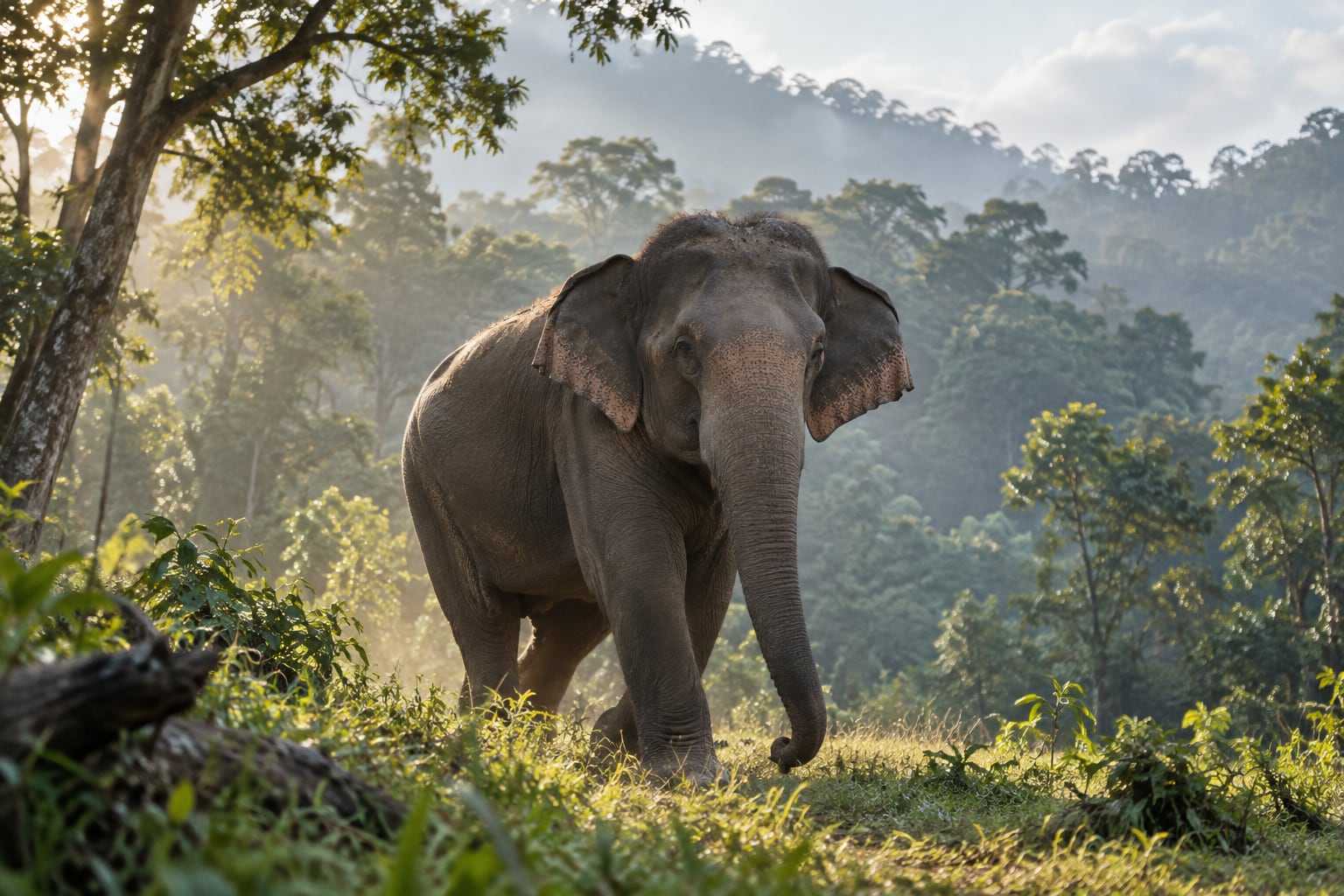
An elephant in a dream can feel impressive, comforting or frightening. You might remember riding one, watching it pass or running away from it. The same animal does not lead every guide to the same story about good fortune.
We compare MyHora, Sanook and a ThaiRath article that names its interpreter, looking at beliefs about prestige and support. Scenes, counts and number examples stay attached to their sources. There are also practical ways to record an incomplete memory without treating a prediction as evidence about real people or events.
A calm elephant, one you ride and one that chases you may belong to different dream-guide categories.
Elephants as symbols of support from elders
MyHora associates a walking elephant with fortune from elders and treats herds as a separate support-related category. These examples show how a large animal is used to describe patronage in the language of a belief guide.
You might use the story to remember people who helped you, rather than waiting for a particular elder to bring luck. The interpretation does not confirm a real event.
Riding and falling require different headings
In MyHora, riding or touching an elephant relates to news from far away, while falling or a rampaging elephant has a different interpretation. Read the complete scene rather than selecting a favourite prediction from the word elephant alone.
If you remember only fragments, the guide’s heading may not fit perfectly. Read as far as it helps you explore the story; you do not have to keep interpreting it until you worry about a journey or a relationship.
Number examples associated with elephant dreams
MyHora identifies 9 and 1 as main digits in its elephant heading and includes 19 and 39. We present them as published belief examples, not current-draw recommendations or prize statistics.
If another source gives different numbers, record its name and the dream category. Preserving provenance shows which tradition you are reading instead of combining everything into an apparent single conclusion.
What the elephant does matters more than its name
Begin with the scene you remember: an elephant walking past, you watching from a distance, or sitting on its back. If you are unsure whether a large animal was an elephant, preserve that uncertainty. Do not add a trunk or a sound because you found a prediction you like.
For riding, distinguish calm riding from nearly falling. For an approaching elephant, distinguish a calm approach from a chase. Feelings describe your experience but should not replace the action: someone can fear an elephant that remains still.
Where the three sources agree and differ
MyHora and Sanook connect general elephant imagery with fortune from elders and share examples 19 and 39. ThaiRath names its interpreter and separates general elephants, riding and counts. Match category names; a one-elephant heading should not automatically replace a general category.
Similar wording does not establish two independent tests producing the same result. The pages consulted did not provide tracking of dreamers or measurements of prize probability. Our table identifies publishers, headings and examples while keeping their different opinions visible.
Read travel interpretations with their conditions
MyHora relates riding or touching an elephant to distant news. ThaiRath’s riding heading discusses news and travel positively. These are symbolic narratives, not safety assessments of a route, vehicle or destination. A reassuring prediction does not establish that every practical travel condition is ready.
A dream can start a conversation about wanting to visit relatives or take a break. Timing, routes and preparations still depend on checkable travel information. The dream and an actual plan can coexist without making the prediction responsible for every decision.
Calm and rampaging elephants are not interchangeable
MyHora separates falling or rampaging scenes from a calm walking elephant. The symbol is not positive in every situation. If you remember escaping, record whether an attack actually occurred or you feared a large animal; other guides may classify those descriptions differently.
Warnings about powerful people or enemies are belief language, not evidence of someone’s intentions. Do not assign a manager or relative to the dream and accuse them. Real disagreements should be examined through actual events and communication. A dream can express worry without establishing another person’s motives.
Herds, one elephant and remembered counts
MyHora has a herd category, while the ThaiRath article distinguishes one and two elephants. Count plays different roles in their organisation. If you saw many without counting, do not turn them into two simply to fit a ready-made number list.
A record might describe several elephants behind a fence and one approaching. You can read two categories and identify which part each resembles. That is different from combining everything into a claim that more elephants mean more fortune; this article provides no calculation linking count with actual events.
Keep number provenance, including 09
MyHora and Sanook include 19 and 39, while ThaiRath’s general heading includes 09 and 13 among another set. Retain both the differences and their sources. Do not remove the zero from 09, which would blur the distinction between a two-digit example and a single main digit.
A personal record can have three columns: event, source and original numbers. Collecting more three-digit sets or creating reversals expands coverage, but does not establish better predictions or explain whether publishers use the elephant symbol in the same way.
Elephant imagery and personal memories
An elephant may remind one person of travel, another of a schoolbook and another of support from an elder. Asking what it recalls helps you explore your own story without seeking a universal answer. These are reflective questions, not confirmed causes derived from a single dream.
NHLBI discusses dreams and REM sleep, not animals as predictors of promotions or good news. Reading sleep information alongside belief guides keeps their scopes distinct. If the dream reminds you of someone who supported you, you can thank them without first waiting for a fortune prediction to occur.
Record what you remember without adding details to fit a guide.
Separate the search terms and the claims of each publisher.
Keep sources alongside explanations and numbers.
Compare sources and observations
Each source answers different questions. This table distinguishes comparable information from details that depend on the original context.
| Source | Category compared | Belief interpretation | Annlek observation | References |
|---|---|---|---|---|
| MyHora | Walking / riding / herds | Elders and distant news; elephant examples 19, 39 | Falling and rampaging have distinct interpretations. | References[1] |
| Sanook | General elephant dreams | Fortune from elders; examples 19, 39 | The full article also includes warnings. | References[2] |
| ThaiRath | General / riding / counts | General examples 09, 13; riding is a separate category | Names Mor Meen Atthaphon as interpreter; not a guarantee of events. | References[3] |
| NHLBI | Dreams and sleep | Information about REM sleep | No elephant-symbol interpretation or assessment of number sets. | References[4] |
Questions & answers
Further answers to questions that often arise when reading this topic
Is every elephant dream positive?
Does riding an elephant guarantee safe travel?
Which count should I choose for several elephants or a herd?
Why do several sources discuss support from elders?
Which category contains 19 and 39?
Should I preserve the zero in 09?
Yes, when quoting the two-digit example from ThaiRath’s general elephant heading. Removing it obscures its format. Reversing it to 90 would be your own addition and should not be attributed to the source.
Does being chased by an elephant mean my manager will harm me?
Do not identify a real person from a dream symbol. Interpretations about elders or authority are belief descriptions, not evidence of a manager’s intentions. Workplace concerns should be assessed through real events and communication.
How should I read an elephant dream after a trip involving elephants?
Record the earlier experience alongside the dream. You can still explore a guide as a matter of interest. Context does not remove emotional value; it can help reflect on impressions, fears or memories without declaring an omen or proving the future.
Sources and their scope
- MyHora — Elephant and herd dreams ↗
Separates walking, riding, falling from an elephant, an agitated elephant and herds within the publisher's belief categories.
- Sanook — Elephant dreams ↗
General interpretation and examples 19 and 39 do not cover every elephant scene.
- ThaiRath — Elephant and elephant-riding dreams, Mor Meen Atthaphon ↗
The publisher credits Mor Meen Atthaphon. Interpretations remain the source's belief-based opinions.
- NHLBI — Stages of sleep ↗
NIH educational information about sleep, rather than a dream book or a test of dream-related numbers.
Sources checked on 10 October 2026 · Original sources may change